Lung Cancer Screening Studies

Current and ongoing research efforts that are expanding access to lung cancer screening and addressing health disparities.

Research in the community

The INSPIRE Study

ALCSI proudly supports the INSPIRE Lung Cancer Screening Study, which provides free lung cancer screening and studies how to make screening more accessible for Black adults.

The study’s published goal is to screen 1,000 Black men and women aged 50–80 with any history of smoking in Boston and Chicago.

Through community outreach, participants are connected with the study team, supported through screening, and offered smoking cessation counseling.

The study team confirms individual eligibility. Complete its participation survey to learn about the next steps.

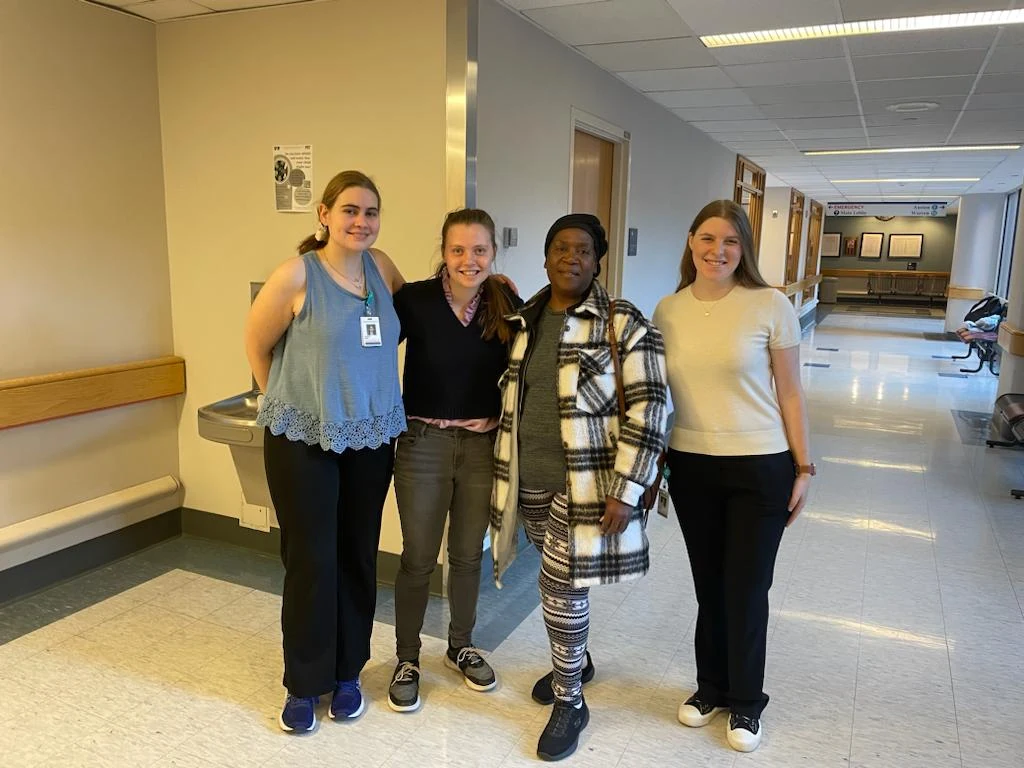
INSPIRE participant Krystal with members of the study team after her first lung cancer screening
Krystal with the INSPIRE study team after her first screening. Shared with participant permission and consent.
A goal for more accessible screening1,000

Black adults to receive lung cancer screening through INSPIRE.

Each dot represents 10 planned participants. This shows the study goal, not completed screenings.

Study locations
Boston & Chicago
Published age range
50–80 years
Smoking history
Any prior or current smoking

Study participation has additional criteria, which the research team will confirm. These study criteria differ from routine screening guidelines. Visit the INSPIRE study website.

Three questions guiding the research

INSPIRE combines community perspectives, screening, and imaging research.

  1. How is screening perceived?

    Understand perceptions of lung cancer screening among Black men and women.

  2. How well does screening detect cancer?

    Evaluate the performance of LDCT in detecting lung cancer in the study population.

  3. What else can imaging tell us?

    Study deep-learning analysis of screening images for cardiovascular disease prediction.

Support at each step

The study team helps participants move through the process, from first conversation to results.

  1. 01

    Connect

    Complete the study participation survey. The research team will review eligibility and contact potential participants.

  2. 02

    Plan

    Study staff help coordinate screening appointments, transportation logistics, and arrival at the hospital.

  3. 03

    Screen

    Participants receive a low-dose CT scan through the INSPIRE study.

  4. 04

    Stay informed

    The study team communicates results and offers smoking cessation information and support.

Sources: INSPIRE study · Yang Lab participation information.

Meet INSPIRE participants

Krystal and Tanya share their screening experiences. These films are shared by the study team with participant consent.

Meet Krystal

A conversation following her first lung cancer screening.

Read the transcript

And I just wanted to hear Krystal had any thoughts about getting screened and wanting to share anything. I think that it's very important that you get a lung screening, especially if you have like maybe a family history of lung cancer or maybe if you're a smoker or something to that effect. My dad died from lung cancer four years ago. And unfortunately, he didn't make it. But hopefully, you know, with a study, more people will live.

So that's why I'm participating.

Thank you.

Well, we really appreciate your time and I wanted to ask how was the screening? Was it quick and easy? Quick and easy. And would you recommend it to other people who are at high risk for lung cancer? Yes. Yes.

Meet Tanya

Hearing directly from a participant and the INSPIRE team.

Read the transcript

I’m here with Tanya. Tanya just participated in the INSPIRE lung cancer screening study and I have a couple of questions for Tanya.

So the first is, why did you decide to get screened for lung cancer? Because my last eight family members died of either lung cancer and or emphysema.

Okay, thank you.

And how was the lung cancer screening exam? Less than five minutes. And what did you do? Painless. You just lay there. That's how you basically have to do is lay there. Just lay there? No. Machine does the rest.

Okay, wonderful. And then what would you say to other people who are at high risk of lung cancer and might be interested in getting screened? There's no reason not to get screened. Get screened. That's your message. Yes.

Okay, wonderful.

Well, thank you so much, Tanya. We really appreciate it.

Expanding the Evidence

Ongoing research is addressing key questions about who should be screened, how often, and how to reach underserved populations.

Health Equity

Research into expanding screening eligibility to reach populations disproportionately affected by lung cancer, including Black Americans who develop cancer at lower smoking thresholds.

Risk-Based Screening

Studies exploring whether risk-prediction models (incorporating factors beyond pack-years such as family history, COPD, and environmental exposures) can better identify who should be screened.

AI & Imaging

Machine learning and artificial intelligence tools are being developed and validated to improve the accuracy of LDCT interpretation and reduce false positive rates.

Biomarkers

Blood-based biomarker studies, including circulating tumor DNA and autoantibody panels, are exploring whether a simple blood test could complement or eventually precede LDCT screening.

Implementation Science

Research focused on overcoming barriers to screening uptake, including patient navigation, mobile screening units, community health worker programs, and telehealth-based shared decision-making.

Long-Term Outcomes

Extended follow-up studies from the NLST, NELSON, and other trials continue to provide data on the long-term benefits and risks of annual LDCT screening programs.

Want to participate in INSPIRE?

Connect with the research team to ask questions or learn about taking part.

INSPIRE study contact: 617-410-8311 · Study website